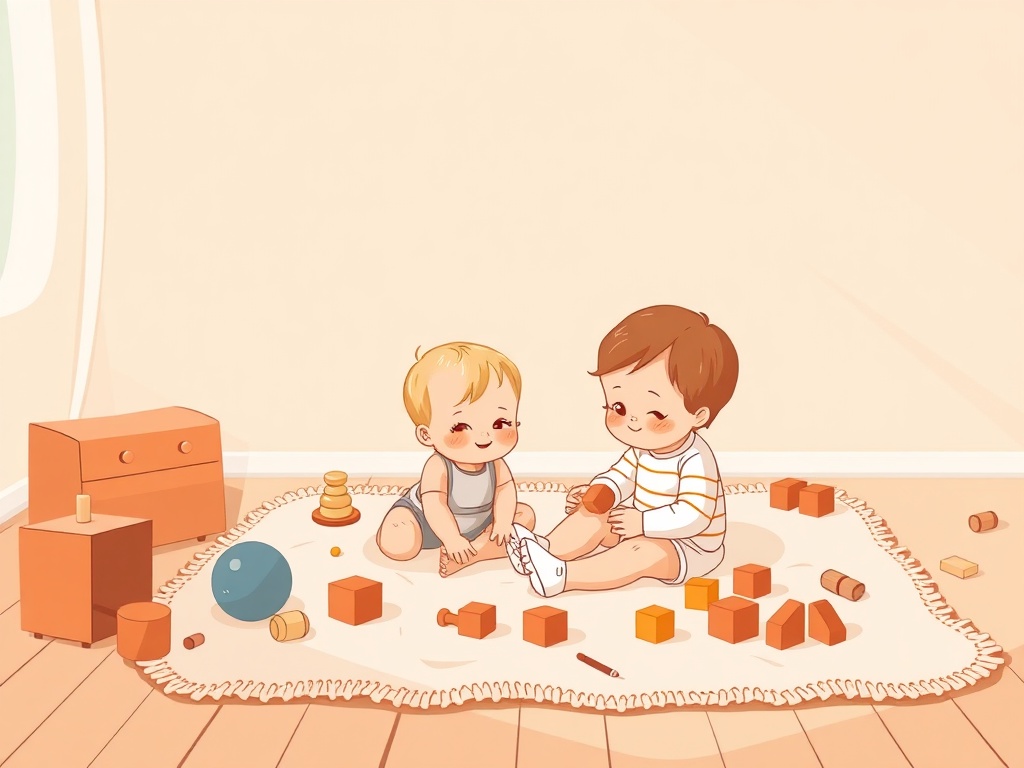
The first twelve months are the most transformative period in human development. Your baby goes from a newborn who cannot hold up their own head to a child who is walking, talking, and forming their first memories.
This guide gives you a clear picture of what to expect — and reminds you that every baby develops at their own pace within a wide range of normal.
Newborn – 1 month
Motor: Head turns side to side when on tummy. Hands stay fisted. Reflex movements (rooting, sucking, grasping).
Social/Communication: Responds to voices, especially yours. Calms to familiar voices. Eyes focus at 20–30cm.
What to do: Skin-to-skin contact. Talk and sing continuously. Start tummy time immediately.
2 months
Motor: Begins lifting head briefly during tummy time. Starts tracking moving objects with eyes.
Social/Communication: First social smile — one of the most rewarding moments in parenting. Starts cooing in response to your voice.
What to do: Make eye contact during feeds. Respond to every coo and smile. High-contrast images at close range.
3 months
Motor: Holds head at 45° during tummy time. Hands start to open. Swipes at objects.
Social/Communication: Laughs out loud. Recognises your face. Starts imitating facial expressions.
What to do: Play on the floor for tummy time. Offer objects to grasp (soft rattles). Read aloud together.
4 months
Motor: Holds head steady. Rolls from front to back. Reaches for and grasps objects.
Social/Communication: Babbles with consonants (“ba”, “ma”). Laughs and squeals. Responds to their name.
What to do: Place toys slightly out of reach during tummy time. Use a baby gym. Narrate everything you do together.
5–6 months
Motor: Rolls both ways. Sits with support. Bears weight on legs when held upright. Transfers objects hand to hand.
Social/Communication: Recognises familiar people vs strangers. Expresses happiness and displeasure clearly.
What to do: Supported sitting practice. Interactive games (“This Little Piggy”). Mirror play. Bath time sensory exploration.
Milestone alert: If your baby is not rolling by 6 months, mention it to your paediatrician.
7–8 months
Motor: Sits independently. May start crawling (or commando crawling, or bottom shuffling). Develops pincer grasp.
Social/Communication: Babbling becomes more complex (“babababa”, “dadada”). Understands “no”. Waves bye-bye.
What to do: Floor time in crawling position. Shape sorters. Peek-a-boo (teaches object permanence). First finger foods.
9–10 months
Motor: Pulls to standing. Cruises along furniture. Crawls confidently (most babies).
Social/Communication: Intentional pointing. Imitates sounds and gestures. May say first words.
What to do: Push-toys for early walking. Simple stacking cups and blocks. Naming games (“Where’s the ball?”). Board books with flaps.
11–12 months
Motor: Stands alone briefly. First steps (range: 9–15 months). Uses spoon with help.
Social/Communication: 1–3 words with meaning. Follows simple instructions (“Come here”, “Give me”). Shows clear preferences.
What to do: Encourage walking with push-toy or your fingers. Simple puzzles (3–4 pieces). Introduce more complex books. Celebrate every step.
The wide range of normal
These timelines are based on the 50th percentile — half of healthy babies develop faster, half slower.
What matters is the trend: is your baby making progress over weeks and months? Are they exploring their environment? Are they engaged?
Single milestones matter less than the overall pattern of development.
When to speak to your paediatrician
Talk to a doctor if your baby:
- Does not smile socially by 3 months
- Does not track moving objects by 3 months
- Does not reach for objects by 5 months
- Does not roll by 7 months
- Does not sit without support by 9 months
- Shows no babbling by 9 months
- Does not say any words by 16 months
- Loses skills they previously had
Early intervention consistently produces better outcomes than waiting.
Want a week-by-week activity plan designed around each developmental stage? Our Play by Age Guide gives you what to do, when to do it, and exactly how — so you can support your baby’s development with confidence.
See also: Tummy Time Guide | Baby Speech & Language Development